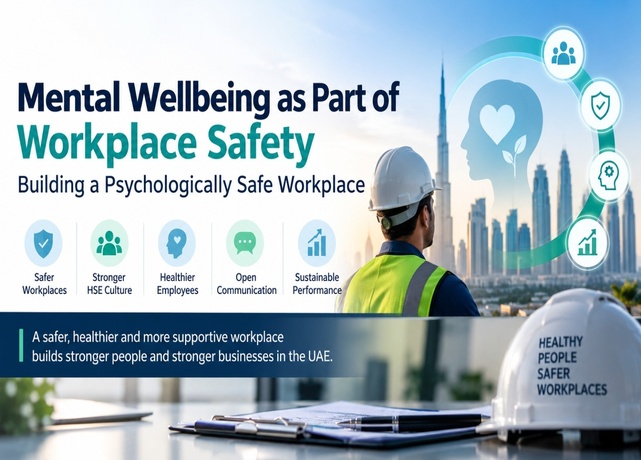
Mental Wellbeing as Part of Workplace Safety: Building a Psychologically Safe Workplace

What Is Workplace Mental Health?
Workplace mental health refers to the mental wellbeing of employees in relation to their working environment and working conditions. It should be considered as part of a broader workplace health, safety and wellbeing approach.
A supportive workplace helps employees work safely and effectively, communicate concerns, ask for support, participate in workplace decisions and maintain healthy working relationships.
What Is Psychological Safety?
Psychological safety means employees can raise concerns, ask questions, report mistakes and discuss safety issues without fear of inappropriate negative consequences. It encourages open communication alongside effective safety controls; it does not remove accountability.
Every workplace team
Leaders, managers, supervisors and employees all have a role in building respectful communication and a safer workplace culture.
Common Psychosocial Risks in the Workplace
Psychosocial risks can arise from the way work is organized and managed. Organizations should identify these risks and consider controls suited to their working conditions.
Workload and Working Hours
- Excessive workload
- Long or poorly managed working hours
- Poor work-life balance
Work Organization
- Low job control
- Unclear roles and responsibilities
- Job insecurity
Management and Support
- Lack of management support
- Poor communication
- Limited opportunities to raise concerns
Workplace Relationships
- Bullying or harassment
- Workplace conflicts
- Negative workplace relationships
Why It Matters to HSE
- Encourages hazard reporting
- Improves visibility of workplace concerns
- Supports employee participation in safety
High-Risk Industries
- Construction and Oil & Gas
- Manufacturing and logistics
- Facilities management, healthcare and hospitality
How UAE Companies Can Improve Workplace Mental Wellbeing
- Assess psychosocial risks: Review workload, working hours, job control, communication, management support and workplace relationships.
- Train managers: Provide training on communication, workplace stress, respectful leadership and employee support.
- Encourage open reporting: Create practical channels for employees to raise safety concerns, near misses and workplace issues.
- Improve work organization: Review workloads, staffing, responsibilities, schedules and communication processes.
- Involve employees in HSE: Use safety meetings, employee feedback, perception surveys and safety committees to encourage participation.
WHO recommends organizational measures that address working conditions and environments when managing psychosocial risk.
10-Point Psychological Safety Checklist
Use these questions to start a practical review of psychological safety in your workplace.
Communication and Reporting
- Can employees report safety concerns safely?
- Are near misses encouraged to be reported?
- Are managers trained in effective communication?
- Are responsibilities clearly defined?
- Are employees involved in safety decisions?
Work Conditions and Support
- Are workloads reviewed?
- Are working hours appropriately managed?
- Are bullying and harassment addressed?
- Is employee feedback collected?
- Are psychosocial risks considered in workplace risk management?
Workplace Mental Health in the UAE
The UAE has an occupational health and safety framework requiring employers to provide a safe and appropriate working environment and implement preventive measures against occupational risks.
The UAE also has Federal Law No. 10 of 2023 on Mental Health, with its executive regulation under Cabinet Resolution No. 213 of 2025 effective from April 2026. Organizations should distinguish between mental-health legislation and their specific occupational HSE obligations and obtain professional advice where necessary.
Integrating Mental Wellbeing into HSE Management
Organizations can use a continuous improvement approach: Assess → Plan → Implement → Monitor → Review. Identify physical and psychosocial risks, establish appropriate controls, train employees and managers, monitor workplace indicators, review employee feedback and continuously improve the HSE system.
For organizations seeking to strengthen workplace culture, explore EHS Consultants' Culture Transformation and Comprehensive HSE Management services.
Workplace Mental Health FAQs
Answers to common questions about psychological safety, psychosocial risks and HSE culture.
Building a Safe and Sustainable HSE Culture
Workplace mental health is an important part of building a safe and sustainable HSE culture. For UAE organizations, psychological safety should complement—not replace—traditional HSE controls.
By assessing psychosocial risks, strengthening communication, training managers and involving employees, organizations can create a workplace where people are better able to speak up, participate and work safely.
EHS Consultants can support organizations through HSE management and culture-transformation initiatives designed around their specific workplace requirements.


Comments
Post a Comment